Sun cream labels can feel like a chemistry exam. Long ingredient names, percentages and terms that mean nothing without a degree to decode them.
Here’s the plain English version of what’s actually in your sunscreen – and why it matters.
The Main Event: UV Filters
UV filters are the active ingredients – the ones doing the actual protection work. They come in two types.
Mineral filters (also called physical filters) sit on the surface of the skin and reflect or scatter UV rays before they penetrate. The two most common are zinc oxide and titanium dioxide. They’re well-tolerated, effective and often used in formulas for sensitive skin and children. One downside: some mineral formulas can leave a white cast, though modern formulations have reduced this significantly.
Chemical filters absorb UV radiation and convert it into heat, which is then released from the skin. Common examples include avobenzone, octinoxate and octocrylene. They tend to be lighter in texture and invisible on the skin, making them a popular choice for everyday use and in spray and oil formats.
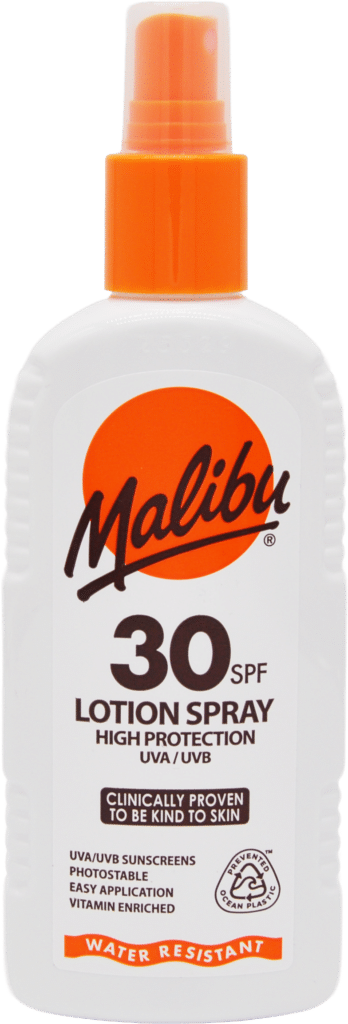
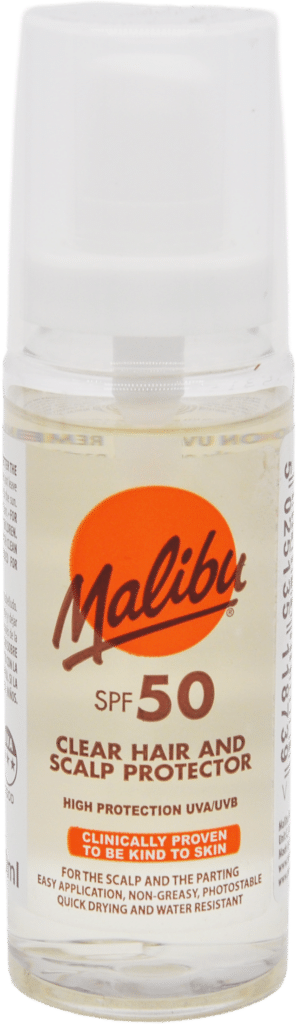
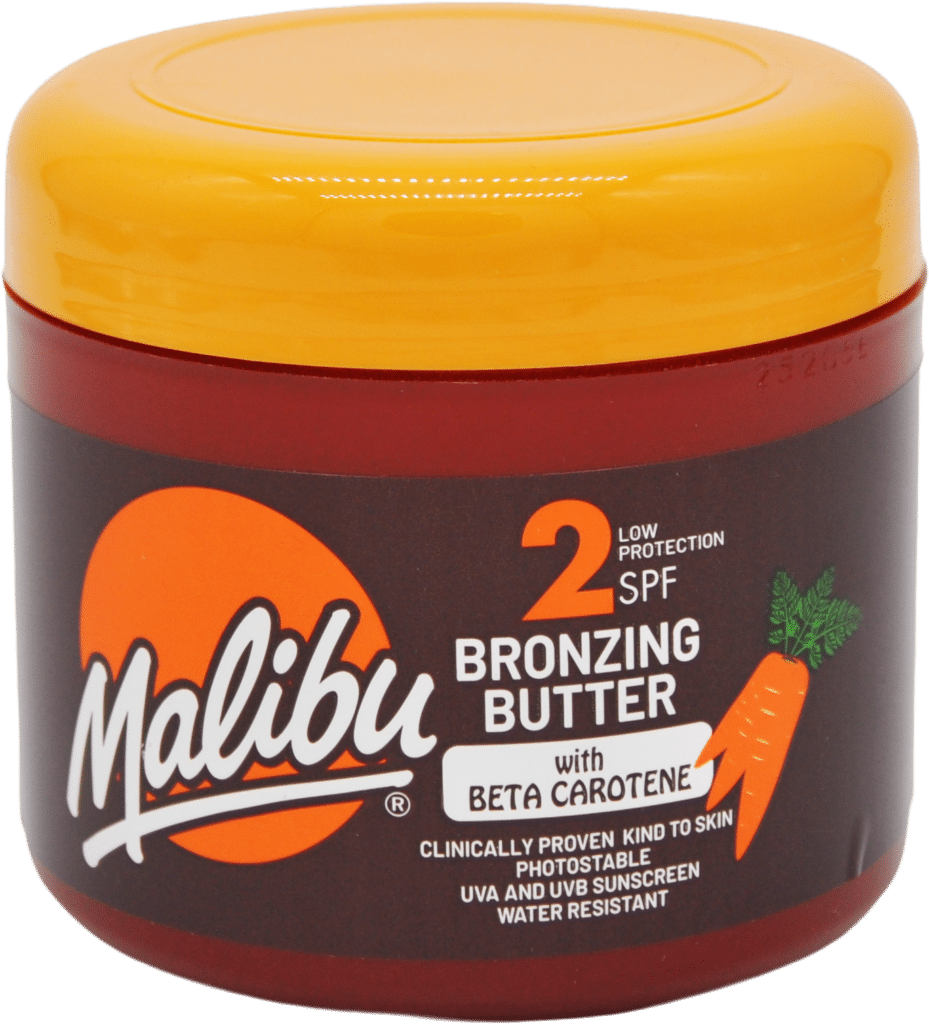
Most sunscreens – including Malibu’s range – use a blend of both types to give broad-spectrum protection across both UVA and UVB wavelengths.
Broad Spectrum: What It Means
“Broad spectrum” means the product protects against both UVA and UVB rays. In the UK, UVA protection is often indicated by a star rating system, but the key thing to look for on the label is “broad spectrum” – that tells you you’re covered for both types of rays. Always check both numbers.
The Supporting Cast
Beyond UV filters, you’ll find a range of other ingredients in most sunscreens.
Moisturisers and humectants – ingredients like glycerin and hyaluronic acid keep the skin hydrated during application and wear. They’re part of why a good sunscreen feels comfortable on the skin rather than heavy or drying.
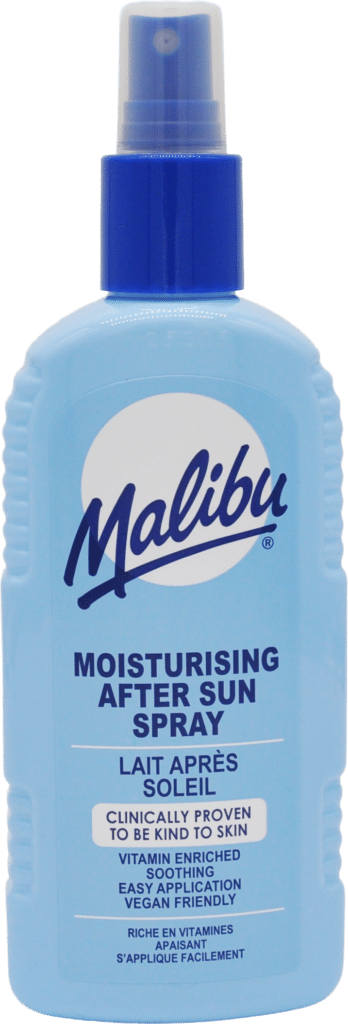
Aloe vera – appears in many after sun formulas and increasingly in sun protection products too. It soothes, cools and supports skin hydration.
Antioxidants – such as vitamin E – help protect against free radical damage caused by UV exposure. You’ll see them listed as tocopherol or tocopheryl acetate.
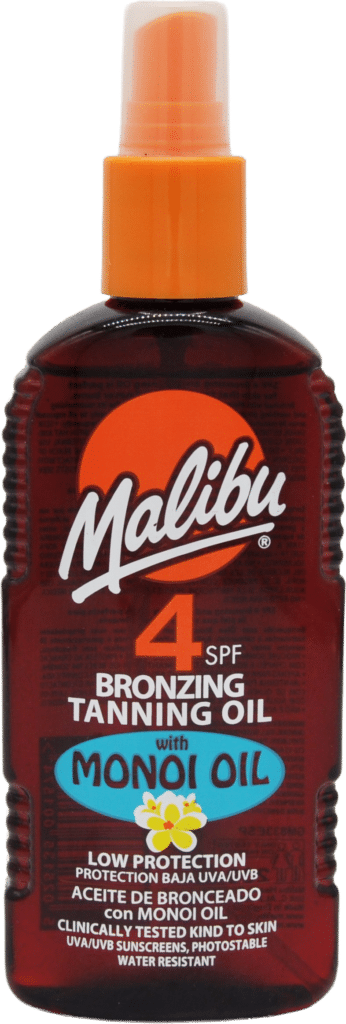
Emollients and skin conditioners – things like coconut oil derivatives and shea butter help the formula spread evenly and feel good on the skin. In bronzing and tanning products, these ingredients are particularly important for an even application and a natural finish.
What About Fragrance?
That distinctive Malibu scent. It’s one of the most talked-about things about the brand – “smells like summer,” “smells like holidays.” It’s real, it’s deliberate, and it’s part of what makes the product memorable.
For most people, fragrance in sun care is completely fine. If you have very sensitive skin or you’re applying to young children, fragrance-free formulas are worth considering – Malibu’s kids range is formulated with sensitivity in mind.
The Simple Version
You don’t need to memorise the ingredient list to make a good choice. The key things to look for are: broad-spectrum protection (UVA and UVB), the right SPF for your situation, and a formula that works for your skin type.
Everything else is supporting cast. The Malibu Match quiz can help you find your perfect formula in under a minute.